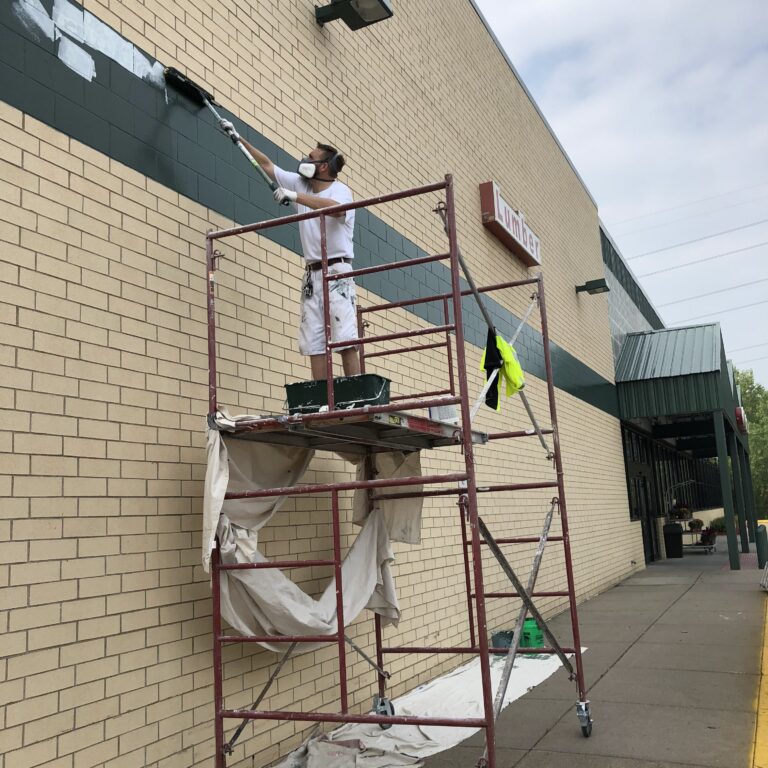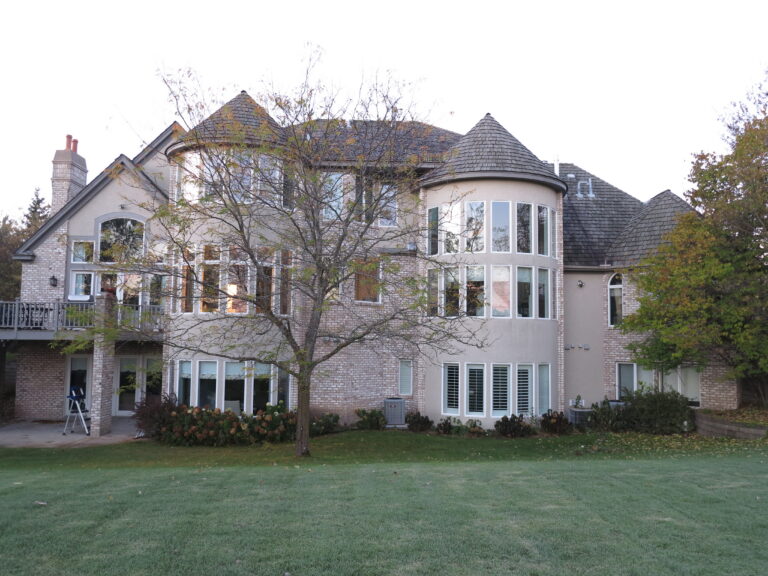
Mac Grove Painting has worked across the Twin Cities metro long enough to know that Cedar, in Anoka County, sits in a stretch of the northern suburbs where the housing stock tells a clear story — postwar construction built fast and built practical, with a handful of midcentury exceptions that demand a different kind of attention. That familiarity matters when we’re pulling up to a 1960s split-level or a low-slung rambler and making decisions about surface prep, paint selection, and how much the local environment is going to push back.
The dominant residential character in Cedar runs from the 1950s through the 1970s: ramblers and split-levels with pine-framed construction, wood siding, and clapboard exteriors that have weathered decades of Minnesota freeze-thaw cycles. Older homes in this range sometimes carry additions from different eras — a colonnaded porch tacked on in one decade, aluminum trim installed in another — and getting a cohesive exterior finish means reading those transitions carefully rather than just rolling a single color across everything. Some of the scattered midcentury modern homes in the area have flat or low-slope rooflines and bold concrete panel details that require thorough caulking at expansion joints before any paint is applied, especially heading into a Minnesota winter.
Working with Cedar’s Environment
Proximity to the Rum River and the region’s heavier tree canopy creates real moisture challenges for exterior work in Cedar. North-facing walls under dense shade are prone to moss and mildew buildup, and using a standard exterior latex without mildew-resistant additives on those surfaces is a short-term solution at best. We factor that into product selection on every job — it’s not an upsell, it’s just what the environment requires. Wood siding and clapboard in particular hold moisture in ways that fiber cement or vinyl don’t, and proper surface preparation before painting is what determines whether a finish lasts five years or twelve.
Southern elevations present a different problem. Open sun exposure accelerates fading, particularly on asphalt siding that’s common on ramblers from this era. Choosing a paint with higher UV resistance on those walls — while coordinating with the cooler, shadier north and west faces — requires some thought about how color reads differently in full sun versus deep shade on the same house. It’s one of those Cedar-specific details that generic paint specs don’t account for.
Trim work around older 12-over-12 windows in the area’s postwar stock is another place where cutting corners shows up fast. These window configurations have more lineal feet of trim per opening than a modern window, which means more opportunity for paint failure at joints and sills if prep is rushed. Getting those details right — cleaning, sanding, priming bare wood before topcoating — is what separates a finish that holds through the season from one that starts peeling by the following spring.
Cedar may not have formal historic districts or a dense concentration of Victorian architecture, but its housing stock has its own logic and its own demands. Mac Grove Painting works in this part of Anoka County because we understand those demands, and because durable, well-executed exterior work is worth doing right regardless of the neighborhood’s architectural pedigree.