Mac Grove Painting has worked on enough Lake Minnetonka-area homes to understand what makes Excelsior’s housing stock distinct — and what makes it demanding. This is a community where Victorian-era craftsmanship is still standing, still occupied, and still worth protecting.
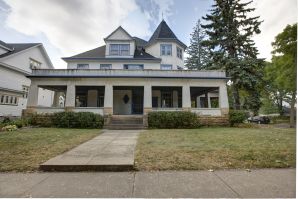
The dominant architectural character here runs deep into the 19th century. Queen Anne, Second Empire, Colonial Revival, and Victorian Gothic styles give Excelsior’s residential streets a density of ornate detail that’s uncommon in most Twin Cities suburbs — decorative cornices, wraparound porches, hipped and gabled rooflines, and in select cases, towers on lakefront properties oriented to catch the view. Landmarks like the Porter/Dillman House (1870) and the Dyer House (1897) represent what’s at stake: two-story and two-and-a-half-story wood-frame structures with trim work and siding that can last another century with the right care, or deteriorate quickly without it. Painting these homes well means understanding how they were built, where they fail, and which products hold up in this specific environment.
Lake Proximity, Tree Cover, and What They Mean for Paint
Excelsior’s setting along Lake Minnetonka introduces real challenges for exterior coatings. Humidity off the water keeps wood surfaces wetter longer into the season. Mature tree canopy on many residential streets slows drying and limits UV exposure — which sounds gentler, but actually creates conditions where moisture lingers in eaves, porch ceilings, and siding laps. Creek edges add to this. The practical result is that porches and north-facing eaves tend to be the first places paint fails, and preparation on those surfaces has to be thorough before any coating goes down. We factor these conditions into product selection and application timing on every Excelsior project.
The downtown historic district brings its own considerations, mixing the early wood-frame residential buildings with brick commercial blocks in Romanesque and Renaissance Revival styles. Where brick appears alongside painted wood trim and storefront elements, surface compatibility matters — not every coating appropriate for siding works well adjacent to masonry, and the transitions between materials require attention. On the quieter residential streets, grander Victorian homes sit near newer traditional and custom builds, so there’s genuine range in what a project might involve, even within a few blocks.
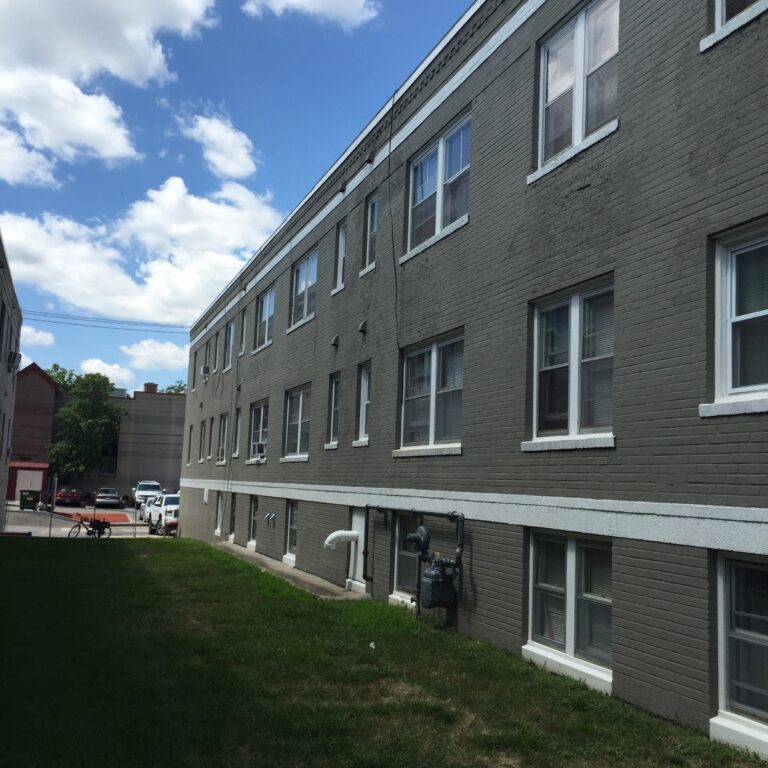
Mid-20th-century development added some variety to Excelsior’s housing mix — modest rowhouses and apartments from the 1950s, like those in Meadowbrook Manor, with simpler pitched or flat rooflines. These require a different approach than the Victorian stock, but they share the same climate exposure. Flat and low-slope rooflines demand particular attention to water management at edges and penetrations, and the siding materials from that era often need careful assessment before repainting.
What runs through all of it — from an 1897 Queen Anne on a shaded lot near the lake to a 1950s apartment building a few streets inland — is that Excelsior’s environment doesn’t forgive shortcuts. Mac Grove Painting approaches every project here with that in mind.