Mac Grove Painting has worked along the St. Croix Valley long enough to understand what sets Lake Saint Croix Beach apart from other communities in the metro — and what it demands from a painting crew. This is a place built around the water, and that fact shapes everything about maintaining a home here.
The character of Lake Saint Croix Beach is rooted in its original purpose as a summer retreat. The dominant housing stock consists of modest wood-frame cottages platted densely across more than 100 blocks of lakefront land beginning in the mid-1920s, when Twin Cities families built simple, seasonal escapes along Lake St. Croix. Those structures were never designed with permanence in mind, which makes thoughtful, regular exterior painting not just cosmetic but genuinely protective. The wood siding common to these cottages is porous and unforgiving when left exposed to seasonal humidity, waterfront moisture, and the hard freeze-thaw cycles that characterize Minnesota winters.
Painting Challenges Specific to Lake Saint Croix Beach
Geography here creates uneven weathering conditions that aren’t always obvious until you look closely at the paint. South- and west-facing facades absorb direct sun off the lake for most of the day, which accelerates fading and surface brittleness over time. The north and east sides of homes sit in the shadow of the valley’s dense tree canopy, where shade and retained moisture create ideal conditions for mildew growth. Addressing both exposures on the same house — one drying out, one staying damp — requires different preparation approaches and paint selections suited to each surface’s actual conditions rather than a one-size application across the whole structure.
Beyond the cottages, there are scattered midcentury influences in the area — split-level and ranch-style homes from the postwar decades with horizontal lines, broad eave overhangs, and large window bands oriented toward the lake. These homes have their own exterior maintenance considerations: larger continuous runs of siding, trim details that tend to trap debris, and window-adjacent surfaces that need careful sealing against water infiltration. A small number of older, more substantial properties along the water reflect earlier architectural traditions from the St. Croix Valley, though elaborate historic detailing is not the norm in Lake Saint Croix Beach.
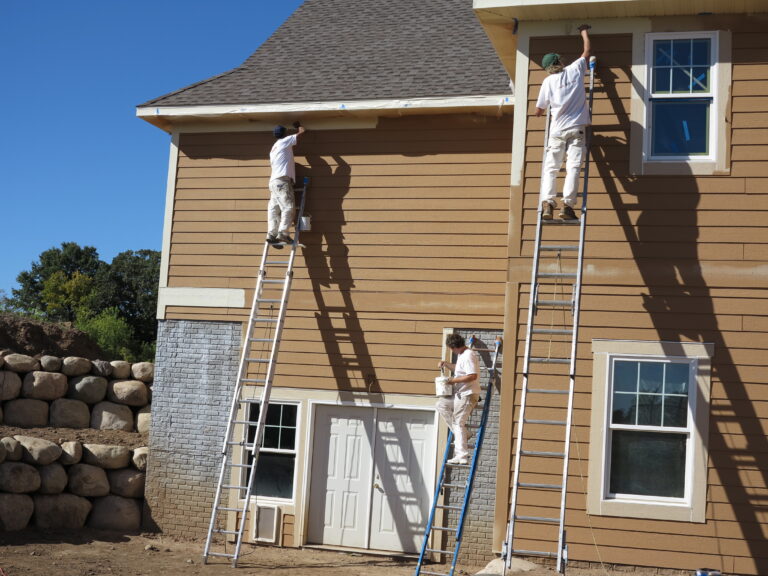
Mac Grove’s approach to work in communities like this one is grounded in preparation and appropriate material selection before a brush ever touches the surface. In a lakefront environment with the humidity levels typical of Lake Saint Croix Beach, failing to properly address bare wood, peeling edges, or mildew before painting only shortens the life of the finished coat. The paint itself matters too — mildew-resistant formulations are standard on north-facing and shaded surfaces here, not an upgrade.
The Twin Cities metro includes a wide range of housing types and climates in a relatively compact geography, and Lake Saint Croix Beach sits at a particular intersection of recreational history, modest-scale architecture, and genuine environmental exposure. Knowing what that combination asks of an exterior paint job is the foundation of doing the work well.