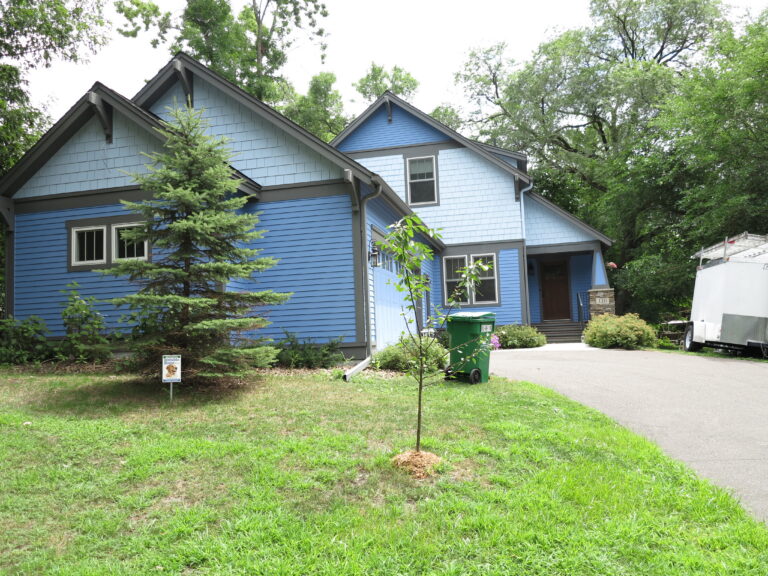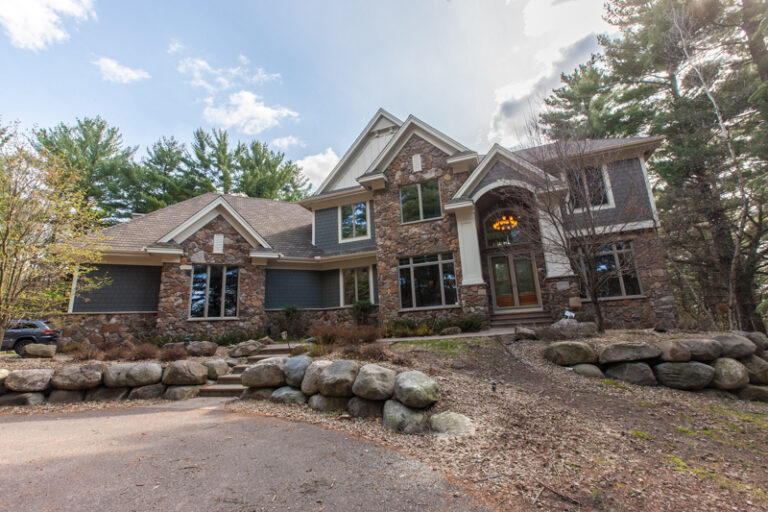
Mac Grove Painting has worked across the Twin Cities metro long enough to recognize that White Bear Lake Township presents a distinct set of exterior painting challenges — ones shaped as much by the lake itself as by the age and character of the homes that line its shores and surrounding woodlands.
The housing stock here spans well over a century and a half. The Cottage Park district, the area’s first European-American settlement, contains 1850s summer cottages that were never designed for year-round Minnesota winters. Many of those structures are now primary residences, and their wood-frame construction reflects that original seasonal intent — thinner walls, less insulation, and exterior surfaces that have absorbed decades of freeze-thaw cycling. Elsewhere in White Bear Lake Township, Victorian-era homes like the 1885 brick Cyrus B. Cobb House and Stick Style examples such as the Fillebrown House showcase ornate scroll-sawn woodwork, Eastlake embellishments, and Richardsonian Romanesque detailing that require a careful, methodical approach to surface preparation and coating selection. Getting paint to adhere properly to these surfaces — and stay adhered — means understanding the material history underneath, not just what’s visible on the face of the siding or trim.
Lake Proximity and the Case for Mildew-Resistant Coatings
White Bear Lake Township’s relationship with the water shapes exterior painting decisions in ways that don’t always get enough attention. High moisture levels, persistent wind exposure off the lake, and shading from mature tamarack and woodland tree cover create conditions where algae and mildew establish themselves quickly on siding, particularly on north-facing walls that dry slowly after rain or morning fog. South-facing exposures face the opposite problem — sun-faded finishes and accelerated paint breakdown from UV intensity. The right coating strategy accounts for both conditions on the same house. Mildew-resistant formulations and paints with meaningful UV inhibitors aren’t optional upgrades here; they’re practical necessities given the microclimate.
The mid-century building boom of the 1950s and 1960s added a substantial number of rambler-style homes to White Bear Lake Township, many featuring brick accents alongside wood and early vinyl siding. These homes have their own weathering patterns — lake mist and temperature swings affect vinyl differently than they affect brick mortar joints or the wood trim that often borders mid-century windows and fascia. More recent construction from the 2010s onward tends toward contemporary designs that maximize lakeshore views, with larger expanses of siding and trim that can experience uneven weathering depending on orientation and surrounding vegetation.
Across all of these housing eras, the underlying issue is the same: exterior coatings in White Bear Lake Township have to perform under genuine stress. Minnesota winters are hard on any finish, but the added moisture load from the lake, combined with the age of many of the area’s structures and the complexity of their exterior detailing, means that preparation and product selection carry real weight. That’s the kind of work Mac Grove Painting takes seriously on every project, whether it’s a restored Victorian with intricate millwork or a mid-century rambler facing the water.