Mac Grove Painting has spent years working across the Twin Cities metro and into the St. Croix River valley, and Houlton is one of those communities where the houses genuinely tell a story worth preserving. Sitting just across the river from Stillwater in St. Croix County, this small Wisconsin village carries a residential character shaped by more than a century of building traditions — and by the particular demands of a landscape where river humidity, dense tree canopy, and shaded north-facing walls are facts of life rather than occasional inconveniences.
The older homes in Houlton reflect the ambitious craftsmanship of the late 19th and early 20th centuries. Queen Anne Victorians with asymmetrical facades, decorative millwork, and layered trim profiles are part of the local fabric, alongside Folk houses featuring steep gable-front rooflines and Victorian-influenced detailing. Brick dwellings and functional rural farmhouses round out the picture. These are homes built for Midwest conditions, but wood clapboard siding and ornate trim require consistent attention — especially in a setting where proximity to the St. Croix introduces elevated moisture levels year-round.
Painting in a River Valley Climate
The environmental conditions around Houlton create challenges that show up quickly on exterior paint. High humidity off the St. Croix, combined with heavy shade from surrounding valley tree cover, means north-facing walls and lower siding sections are particularly vulnerable to mildew growth, moss, and the kind of slow-creeping moisture damage that causes paint to peel prematurely. Flood staining on lower exterior courses is not unusual for properties closer to the river. Addressing these conditions properly means surface preparation — cleaning, treating for mildew, and applying mildew-resistant primers before a brush ever touches finish coat — is not optional. Skipping that step on a Queen Anne in Houlton is how a paint job that should last eight years fails in three.
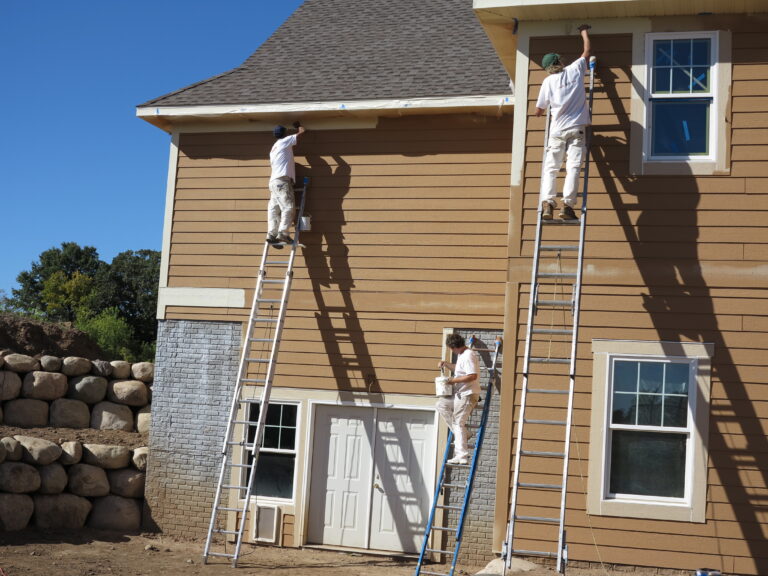
Steep Victorian rooflines and multi-story facades also require thoughtful staging. Getting full coverage on gable trim or upper cornice details on an asymmetrical Queen Anne isn’t a one-ladder job; scaffolding is often the right call, and it changes the scope of prep and access planning accordingly. Post-WWII ranch homes and bungalows scattered through the area present a different set of considerations — flatter profiles, broader siding expanses, and in some cases original mid-century materials that need evaluation before coating.
Mac Grove approaches every Houlton exterior with the same discipline we bring to work in Saint Paul’s older neighborhoods: read the building, read the site, and plan the work around what’s actually there. The housing stock here rewards that kind of attention. These are homes that have stood for generations in a demanding climate, and the right exterior painting program keeps them that way — without cutting corners on preparation or material selection just to move faster.