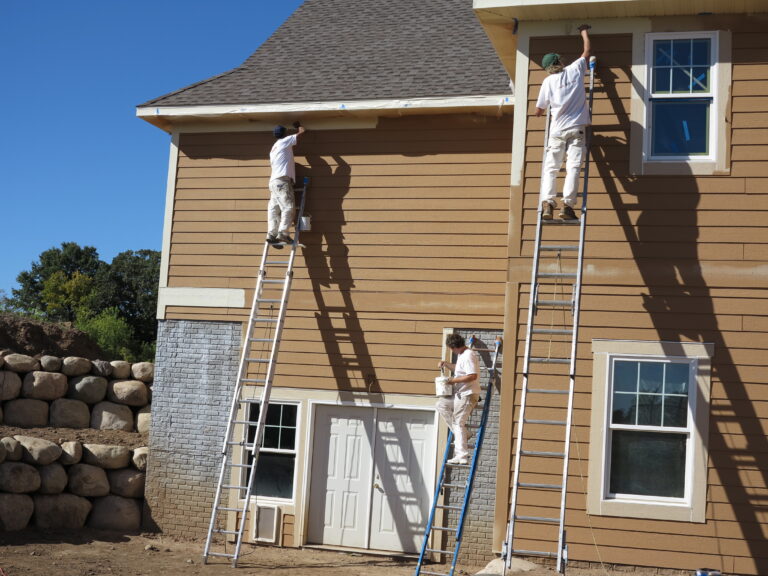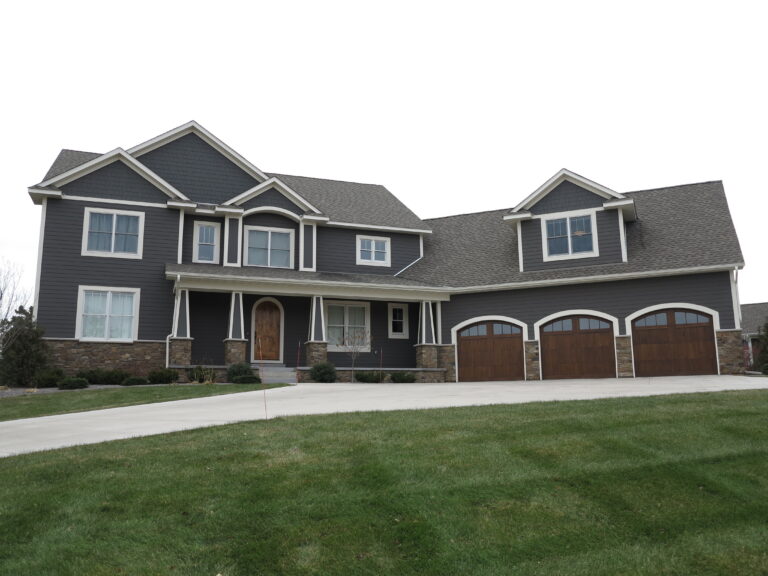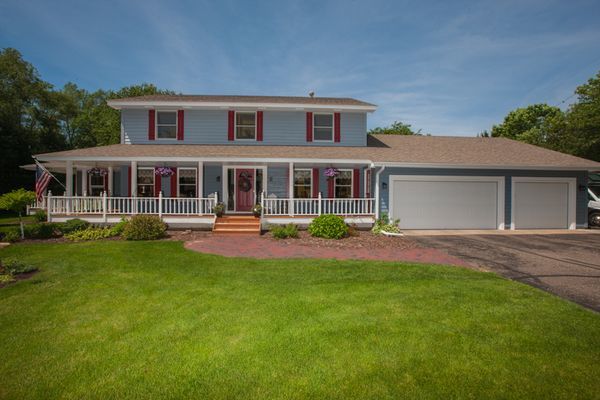
Mac Grove Painting has worked across the St. Croix River corridor long enough to understand what sets Boardman apart from the suburban projects closer to the Twin Cities core — and what the homes here actually need from a painting contractor. This is rural St. Croix County, where the housing stock tends toward early 20th-century Colonial Revival and Craftsman construction, and where the environment itself has a say in how long any exterior finish holds up.
A good portion of Boardman’s older homes reflect the modest, durable character typical of rural Midwest building between the 1880s and 1930s. Clapboard siding, brick facades, and stucco exteriors are common, paired with asphalt shingle roofs and the occasional surviving tile. Craftsman-influenced details — overhanging eaves, tapered porch columns, horizontal trim bands — require careful prep and precise application to look right and last. On the older Victorian-influenced properties, ornamented cornices and asymmetrical facade elements demand the same patience. Rushing through surface preparation on these materials doesn’t just affect appearance; it shortens the life of the coating significantly.
Painting Near the St. Croix: What the Environment Demands
Geography shapes a lot of the painting decisions in Boardman. Proximity to the St. Croix River brings elevated humidity that accelerates paint breakdown on exposed wood and stucco, and properties closer to the river corridor can see moisture infiltration that compromises adhesion before a coat is even a few years old. Dense tree cover — characteristic of this part of St. Croix County — limits sunlight on north- and east-facing surfaces, creating conditions where moss and algae establish themselves on clapboard siding faster than most homeowners expect. Surface cleaning and mildewcide-treated primers aren’t optional add-ons in this environment; they’re part of doing the job correctly.
Earth-tone palettes have always suited Boardman’s low-slung, tree-framed properties well, and many homeowners here choose colors that complement the natural surroundings rather than contrast with them. That said, color selection on a stucco Colonial Revival or a brick Craftsman bungalow involves more nuance than picking a trim white and a body color — the texture of the substrate, the shadow patterns from deep eaves, and the orientation of the facade all affect how a color reads in practice versus on a chip.
Modern construction is relatively limited in Boardman, which means most of the work here involves maintaining and restoring aging exteriors rather than finishing new builds. Stucco panels that have developed hairline cracks, clapboard that has begun to peel along end grain, porch floors worn through their topcoat — these are the conditions that show up consistently on properties of this age and in this climate. Addressing them properly before painting is what separates a finish that lasts a decade from one that starts failing in three years. Mac Grove brings the same standards to a rural St. Croix County home that we apply to any project across the metro.