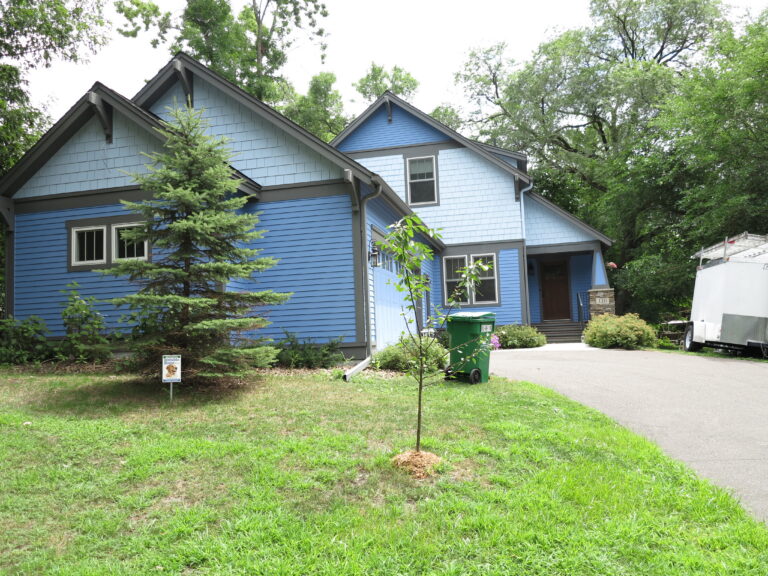
Mac Grove Painting has worked across enough of the east metro to know that North Saint Paul has its own rhythm — practical, unpretentious, and built for Minnesota’s reality. The housing stock here tells that story clearly. Post-war expansion filled the city with ramblers, ranch-style homes, and split-levels through the 1950s, ’60s, and ’70s, followed by a wave of two-story colonials and larger suburban builds in the ’80s and ’90s. Pre-war architecture is rare here; this isn’t a neighborhood of ornate Victorians or historic brick rowhouses. What you find instead are well-maintained single-family homes with straightforward profiles, aluminum and vinyl siding on a large share of properties, brick accents on maybe a fifth to a quarter of them, and a lot of the beige and earth-tone palettes that defined that era of residential construction.
Those earth tones have one persistent enemy: time and UV exposure. Fading is among the most common issues we see on North Saint Paul exteriors, especially on south- and west-facing elevations that take the brunt of summer sun. The fix isn’t complicated, but it does require the right product — exterior latex formulations engineered to hold color through Minnesota’s freeze-thaw cycling and summer humidity swings. Skipping that step leads to cracking and peeling within a few seasons, particularly on wood trim and older aluminum siding that’s already seen decades of expansion and contraction.
Trees, Shade, and What They Do to Paint
One thing that stands out about painting in North Saint Paul is the tree canopy. Mature oaks and maples are common throughout the city, and while they’re worth having, they create conditions that work against exterior finishes. North-facing siding under heavy shade stays damp longer after rain, creating the right environment for mildew and moss to take hold. Tree sap deposits add another layer of prep work before any coating goes down. Near the ponds and low-lying areas in and around the city, ambient humidity tends to linger, which affects how paint cures and how long surface prep needs to settle before application begins. We factor all of that in — it’s not unusual for the north elevation of a North Saint Paul home to need more thorough cleaning and priming than the rest of the house.
Gable vents and soffits deserve particular attention on these mid-century homes. The original construction details on ramblers and split-levels often left those areas with minimal protective finishing, and decades of moisture exposure shows up there first. Proper prep on those surfaces — cleaning, sanding where needed, spot-priming bare wood — makes the difference between a paint job that holds for eight to ten years and one that starts showing wear in three.
We approach every North Saint Paul project with the same attention we’d give a house in our own backyard in Macalester-Groveland. The homes here are built to be lived in, not displayed, and the work we do reflects that — careful preparation, appropriate materials for the climate, and finishes chosen to last through what Minnesota actually throws at them.