Mac Grove Painting has worked across the Twin Cities long enough to recognize that Robbinsdale has its own distinct character — a compact, tree-lined suburb where early 20th-century craftsmanship sits a few blocks from mid-century geometry, and where the exteriors of those homes carry real history worth preserving carefully.
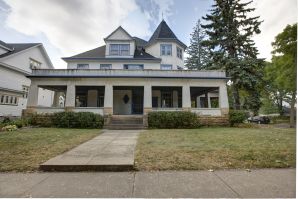
Established in 1893, Robbinsdale developed over several decades of distinct architectural eras that are still visible in the neighborhood streetscapes today. Queen Anne Victorians from the earlier period bring the kind of ornate detailing — decorative trim, steep gables, layered profiles — that demands patience and precision from any painter working on them. The Orchards mansion stands as a well-known local example of that ornamented Victorian sensibility. From the 1920s and 1930s, Craftsman and Tudor Revival homes added their own exterior vocabularies: exposed rafter tails, brick accents, stucco, and wood trim that needs consistent attention to hold up under Minnesota winters. Later postwar construction, including ramblers and mid-century moderne structures, introduced cleaner lines and different materials — the blonde brick and geometric glass of the Terrace Theatre captures that 1950s design confidence that appears in some of Robbinsdale’s residential stock as well.
Exterior Painting in a Minnesota Climate
What unites all of these building eras is the weathering they face. Robbinsdale’s dense tree cover means certain elevations see limited direct sun for months at a time, while north-facing walls stay damp well into spring. Heavy snowfall, freeze-thaw cycling, and the temperature swings common to this latitude put real stress on paint films — particularly on wood trim, brick, and stone veneer surfaces. Selecting the right primer and topcoat for each substrate is not a minor detail here; it’s the difference between a paint job that holds for eight or ten years and one that starts failing at the seams by year three.
For the older homes in Robbinsdale, surface preparation is where most of the real work happens. Victorian-era wood trim and Craftsman millwork often have multiple generations of paint layered on them, and getting a stable, lasting finish means addressing adhesion, moisture management, and surface integrity before a brush or roller comes near the topcoat. We approach those projects with a thoroughness that reflects how much those details matter to the homes themselves and to the people who live in them.
The mid-century and moderne structures in the area call for a different approach — one that respects the clean lines and restrained palette those styles were built around. Matching tone and sheen to the original character of a building matters as much as the application itself, whether that’s a rambler with board-and-batten accents or a brick commercial facade near the Terrace area.
Robbinsdale is a community that takes its architectural history seriously, and we bring the same attention to it that we do throughout the Twin Cities metro. The work here asks for familiarity with older materials, regional climate realities, and a steady hand on homes that have stood for generations and are built to keep standing.