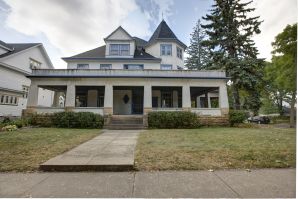
Mac Grove Painting has worked across enough of the Twin Cities metro to recognize that Chaska presents a genuinely distinct set of painting challenges — ones shaped by the town’s deep architectural history, its position along the Minnesota River, and a housing stock that spans nearly two centuries of construction.
The most visually striking homes in Chaska are concentrated near the Walnut Street Historic District and the older blocks running toward the river. These structures — Greek Revival cottages, Victorian and Queen Anne homes, Neo-Classic and Georgian-influenced buildings — were often built with the distinctive buff-colored brick quarried locally in the mid-to-late 1800s. That Chaska brick is durable, but painting or priming masonry that has absorbed decades of riverine moisture requires careful surface preparation and the right primers. Cut corners here and you’ll see peeling and efflorescence within a season or two. We don’t cut corners.
Moisture, Tree Cover, and What They Mean for Exterior Coatings
The Minnesota River corridor isn’t just a scenic backdrop — it’s an active factor in how exterior paint performs. Homes close to the river deal with elevated ambient humidity that accelerates mildew growth on wood siding, trim, and porch elements. Large wooded lots throughout Chaska compound this effect by limiting airflow and keeping surfaces in shade for much of the day. In these conditions, standard exterior paints underperform. Mildew-resistant formulations with robust binders are the appropriate choice, and the surface has to be clean, dry, and properly primed before a drop of topcoat goes on. We also pay attention to microclimates lot by lot — a south-facing Victorian gable in the river valley sees very different UV exposure than the shaded north side of the same house, and paint selection should reflect that.
Away from downtown, Chaska’s mid-century Jonathan neighborhood represents a different kind of project entirely. Built as part of a planned “New Town” development in the 1960s, these homes often feature horizontal siding profiles and design details that read very differently from the ornate trimwork of the historic district. More recent construction in areas like Clover Ridge brings a mix of contemporary styles, while the surrounding suburbs include plenty of 1990s-era split-levels and ranch homes where owners are undertaking exterior updates — refreshing dated color schemes or repainting fiber cement and vinyl-adjacent siding systems that have weathered through multiple Minnesota winters.
Each of these contexts calls for a different approach. The materials are different, the exposure is different, and what constitutes a durable finish varies accordingly. Working across this range of housing eras is something Mac Grove Painting does routinely throughout the metro — and the variety of Chaska’s built environment fits squarely within that experience. Whether the project is a carefully detailed Victorian near the historic core or a newer home in a contemporary subdivision, the underlying standard is the same: preparation done thoroughly, materials selected for the actual conditions, and work executed cleanly from start to finish.