Mac Grove Painting has worked on enough suburban Hennepin County homes to know that Hamel presents a distinct set of conditions — ones that don’t show up in a generic contractor’s checklist but matter quite a bit when you’re picking primer, scheduling a repaint, or troubleshooting persistent peel on a north-facing wall. The city sits close enough to Lake Minnetonka that wind-driven moisture is a real factor, and the dense canopy of mature oaks and maples that gives many Hamel neighborhoods their settled, shaded character also creates conditions where siding stays damp longer than it should and moss takes hold on roofs before most homeowners notice it.
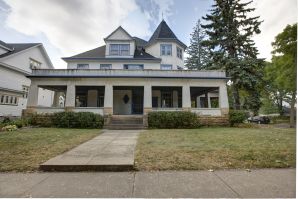
The housing stock here skews decisively post-1970s. Ramblers and split-levels built in the seventies and eighties make up a substantial share of the inventory, followed by the two-story colonials and transitional-style homes that went up through the nineties. These aren’t ornate structures — the general aesthetic runs toward practical, low-maintenance exteriors that suited Midwest winters and modest lot development. What that means for painting is that wood clapboard siding, where it still exists on older builds, tends to show warping and paint failure at the seams and trim lines, particularly on shaded elevations where freeze-thaw cycling has worked its way into the wood over decades.
Humidity, Shade, and the Specific Challenges of Hamel Exteriors
Newer construction in Hamel brings a different set of considerations. Vinyl siding, brick accents, and the stone veneers that became common in the 2000s and beyond require careful surface prep and product selection — not every coating bonds the same way to composite or engineered materials, and skipping the right primer on a stone veneer detail is a shortcut that shows up within a season or two. Some newer builds also feature metal roofing elements that interact differently with adjacent painted surfaces under the thermal swings Minnesota delivers from January through July.
The mildew problem deserves direct attention. Leaf debris accumulating along eaves and in trim channels, combined with the limited sun exposure that shaded lots in Hamel receive, creates a recurring cycle of organic growth that standard latex paint handles poorly. Mildew-resistant formulations — and in some cases, a proper mildewcide-treated primer — are worth the modest additional cost on north and east-facing surfaces especially. On southern exposures, the calculus reverses: summer UV intensity in this part of Hennepin County is hard on pigment, and fade resistance becomes the relevant specification.
Even drying time works differently here. Heavy tree cover means that after rain or morning dew, siding on shaded elevations can stay surface-wet well into the afternoon. Applying paint to a substrate that hasn’t fully dried is one of the more reliable ways to guarantee adhesion failure down the road. It’s the kind of variable that experienced painters account for in the daily schedule — and one that makes local knowledge genuinely useful, not just a selling point.