Mac Grove Painting makes the drive across the St. Croix River regularly, and Warren is the kind of community where that trip feels worthwhile — older homes with real architectural character, the kind of exterior work that rewards careful preparation over speed.
The housing stock here leans heavily toward late 19th- and early 20th-century construction, with styles ranging from Greek Revival and Italianate to Queen Anne and Classical Revival. These aren’t homes that were built to be repainted quickly. Original clapboard siding, ornate porch details, asymmetrical facades, and steeply pitched rooflines all demand a measured approach — proper surface preparation, the right primers for aged wood, and a painter who understands how period trim profiles behave differently than modern millwork. Homes this well-preserved often still carry original paint layers, which means lead testing and careful containment are part of the job, not an afterthought.
Working with Warren’s Terrain and Tree Cover
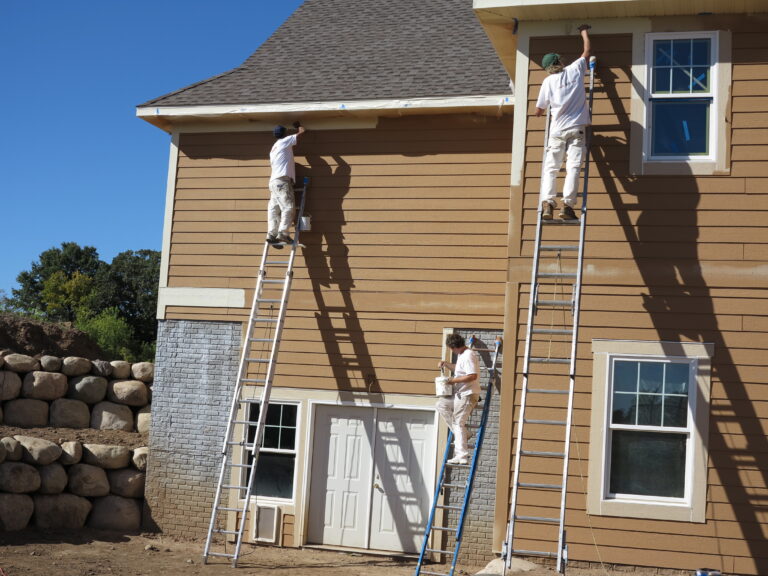
The local topography adds another layer of complexity. The area’s hillside positioning means sun exposure varies considerably from one elevation and orientation to the next. South-facing walls take on more direct UV load over the years and may show fading or chalking ahead of their shaded counterparts. North-facing and heavily shaded surfaces, particularly those near the dense mature tree canopy that characterizes much of the area, tend to stay damp longer and are more susceptible to mildew and surface algae. On those elevations, mildew-resistant primers aren’t optional — they’re what separates a paint job that holds for a decade from one that starts failing in two or three years. Ladder setup on sloped terrain also requires more planning than a flat suburban lot, and we factor that in from the start.
In Warren, exterior materials on older homes typically mix painted clapboard with detailed wood trim that has been repaired, patched, and repainted across multiple generations. That layered history means adhesion testing matters, and so does knowing when to spot-prime versus when a full surface needs to be stripped back. Prairie School and early Gothic Revival influences show up occasionally in window surrounds and decorative brackets — details that are easy to lose if a painter rushes the masking or uses an overly aggressive spray setup where brush work is the right tool.
Minnesota and western Wisconsin winters are hard on exterior coatings, and the freeze-thaw cycles that define the region create specific vulnerabilities at joints, sills, and any spot where water can work its way behind a surface. We schedule exterior work in Warren during windows when temperatures and humidity support proper cure times, because paint applied under the wrong conditions fails from the inside out regardless of how good the product is.
The homes in Warren are worth doing right. That’s the short version of why we approach this work the way we do — not because it’s a selling point, but because the alternative is a paint job that doesn’t last, on a house that deserves better.